http://www.bbc.co.uk/news/business-13622189
This article talks about the Birmingham City Council which is off-shoring its IT related jobs to India. As a result, it has angered a union who fears that they could lose their job and not get it back. I found this article to be very interesting because I have never heard of a city council off-shoring jobs overseas especially since it is a public service related job. I have always thought that outsourcing and off-shoring are things done only by huge companies overseas. It would make sense since many of these companies would like to minimize their costs and earn profits. Since outsourcing and off-shoring leads to cheaper labor such as from countries like India or the Philippines. While they may be doing it to reduce costs, it is interesting to find out that even local council are ready to give away many people's jobs just for the sake of cost reduction.
Should local government offices be allowed to off-shore or outsource labor overseas for the sake of reducing costs even though it would lead to the loss of jobs of many workers especially since these jobs are in the public sector where the workers are working for the local government rather than for companies?
Thursday, March 27, 2014

Wednesday, March 19, 2014
European Union
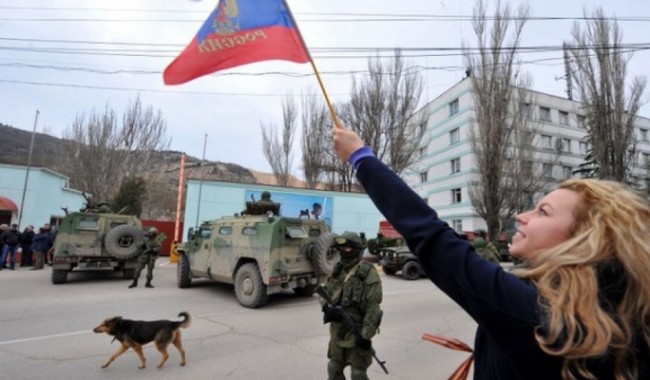
URL: http://guardianlv.com/2014/03/crimeas-referendum-sparks-difference-of-opinion-in-european-union/
The article talks about how their are differences in opinions within the EU about the sanctions that it will impose on Russia after the referendum in Crimea regarding its joining with Russia. Many top EU officials have decided to create a blacklist of Russian businessmen from the political to the military realm and to impose travel restrictions on them. However some top businessman such as Alexey Miller, CEO of a natural gas exporting company in Russia called OAO Gazprom is exempt from the list. Some say that the reason for this is that Russia provides a lot of the energy needs of the EU.
In my opinion, this is some sort of example of a loss of sovreignty when joining a multi governmental organization such as the EU because while the are differences in opinions within the ministers regarding the imposition of sanctions on Russia, the final stance of the EU is that sanctions will be imposed on Russia as a result of its actions in Crimea. The article states for example, that Germany is calling upon Russia to provide close to 35% of the gas and oil that the country imports. They will be unable to do this if they cannot negotiate with Russian companies due to the sanctions that will be imposed, in which Germany will have to agree with since they are a part of the EU.
Thursday, March 13, 2014
Cultural diffusion
Cultural diffusion is when there is a voluntary or consented change in culture and this can be seen everywhere around the world. Globalization has helped to accelerate the spread of culture around the world because of international trade and through transnational corporations or TNCs. Transnational corporations have been a major part in cultural diffusion where their goods and services are spread not only in their country of origin but to many parts around the world as well.
A very good example of cultural diffusion can be seen here in the Philippines which is highly influenced by Western ideas and culture, mainly from the United States. The majority of Filipinos openly embrace the influence of American culture in the country. There are a vast number of transnational corporations in the country such as McDonalds, Starbucks, Nike, Adidas, and many more. These TNCs have brought over not only their goods to sell to the people but have also influenced their way of life. Starbucks is a company that has spread the custom of afternoon coffee breaks in work. A lot of office workers would stop by Starbucks in order to have a cup of coffee or in break times. This can be seen in many business districts in Metro Manila. Consumerism is also increasing as more Filipinos are becoming affluent. Companies like Nike and Adidas are very famous because of the products that they sell such as basketball shoes of famous basketball players in the NBA like Kobe Bryant or LeBron James. Conveniently, with the country's love for basketball, people are attracted into buying the products form these companies. They can unintentionally help to spread consumerism with the already existing cultural influences that the country has.
A very good example of cultural diffusion can be seen here in the Philippines which is highly influenced by Western ideas and culture, mainly from the United States. The majority of Filipinos openly embrace the influence of American culture in the country. There are a vast number of transnational corporations in the country such as McDonalds, Starbucks, Nike, Adidas, and many more. These TNCs have brought over not only their goods to sell to the people but have also influenced their way of life. Starbucks is a company that has spread the custom of afternoon coffee breaks in work. A lot of office workers would stop by Starbucks in order to have a cup of coffee or in break times. This can be seen in many business districts in Metro Manila. Consumerism is also increasing as more Filipinos are becoming affluent. Companies like Nike and Adidas are very famous because of the products that they sell such as basketball shoes of famous basketball players in the NBA like Kobe Bryant or LeBron James. Conveniently, with the country's love for basketball, people are attracted into buying the products form these companies. They can unintentionally help to spread consumerism with the already existing cultural influences that the country has.
Pros and Cons of Globalization
Pros and Cons of Globalization
Pros:
- Spread of ideas and information
- Ideas and information is spread around the world mainly through trade and the internet and it allows people to be exposed to other cultures and way of thinking
- Increased and easier communication
- The invention of social media such as Facebook, Twitter and Skype has allowed easier communication between people anywhere around the world
- Faster and better travel
- The world has gotten smaller in the sense that people can go to and from a place today faster than ever before due to flight
- More access to other goods and services
- International trade has allowed the flow of goods and services between countries through imports and exports
- Access to markets and resources
- Due to international trade, companies can now sell their goods to other countries who demand a good or service such as Samsung producing smartphones and selling them to countries that demand the phones
- Countries can also gain access to other resources that may not be available to them such as oil and gas for Japan which has no natural resources
- Increased investment
- Many countries can benefit from increased overseas investment mainly from MEDCs that invest in LEDCs
- LEDCs can be provided with better infrastructure from technology and aid provided to them by MEDCs
- Provides employment
- Transnational corporations are able to provide many countries that are otherwise unable to provide jobs
- Examples include McDonalds or Starbucks, both which can be found in many countries both MEDCs and LEDCs where they provide employment
Cons:
- Exploitation of workers
- Transnational corporations have been criticized for subjecting workers to work with low pay and poor working conditions such as factories in LEDCs that produce goods to be sold to other countries
- An example would be a Nike factory in Bangladesh where workers accept the low pay and poor conditions due to lack availability and of a better job
- Outsourcing
- Since transnational corporations are looking to generate more profit, jobs are brought to LEDCs due to cheaper labor costs and this causes jobs to be transferred over from the country of origin
- Competition from foreign companies
- Domestic companies in many industries will be forced to compete with many of the larger transnational corporations
- The smaller companies could go out of business if they cannot compete
- Black markets
- Illicit trade is on the rise due to globalization
- There is an increase in counterfeit products being produced and sold at cheaper prices, mainly form China and it could affect many companies
- Dependence of LEDCs on MEDCs
- Many countries today are interdependent and so a country can affect another
- LEDCs may be dependent on MEDCs to provide things like investment and employment and this can cause the MEDCs to be in power
- Loss of cultural identity
- The exposure to foreign ideas and pop culture may lead to a loss of cultural identity such as the spread of American pop culture around the world
Subscribe to:
Posts (Atom)